

For years, major social networks acted as gatekeepers of attention, deciding which posts surfaced in users’ feeds. While people could follow creators, engage with content, or hide posts they disliked, the ultimate control remained in the hands of recommendation engines that quietly dictated what appeared on screen.
That dynamic is beginning to change. Social platforms are gradually surrendering part of that control, introducing AI-powered tools that allow users to actively shape the algorithms guiding their feeds.
Moving beyond simple “Not Interested” buttons, platforms such as Threads, Instagram, and TikTok are rolling out features that let individuals train recommendation systems and influence the content they encounter every day.
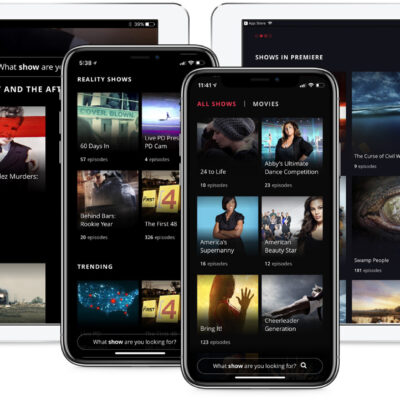
The trend signals a broader transformation in the way recommendation engines operate. Rather than functioning like a traditional television channel that delivers the same programming formula to everyone, social feeds are evolving into something closer to a personalized streaming experience—one where users can fine-tune recommendations and steer content toward their own interests.
For users, the appeal is obvious: a feed that feels more relevant and aligned with personal preferences. For social media companies, the benefit lies in stronger engagement, driven by content people are more likely to watch, read, and interact with.
Here’s how leading platforms are giving users a greater voice in shaping their recommendation algorithms.
Threads
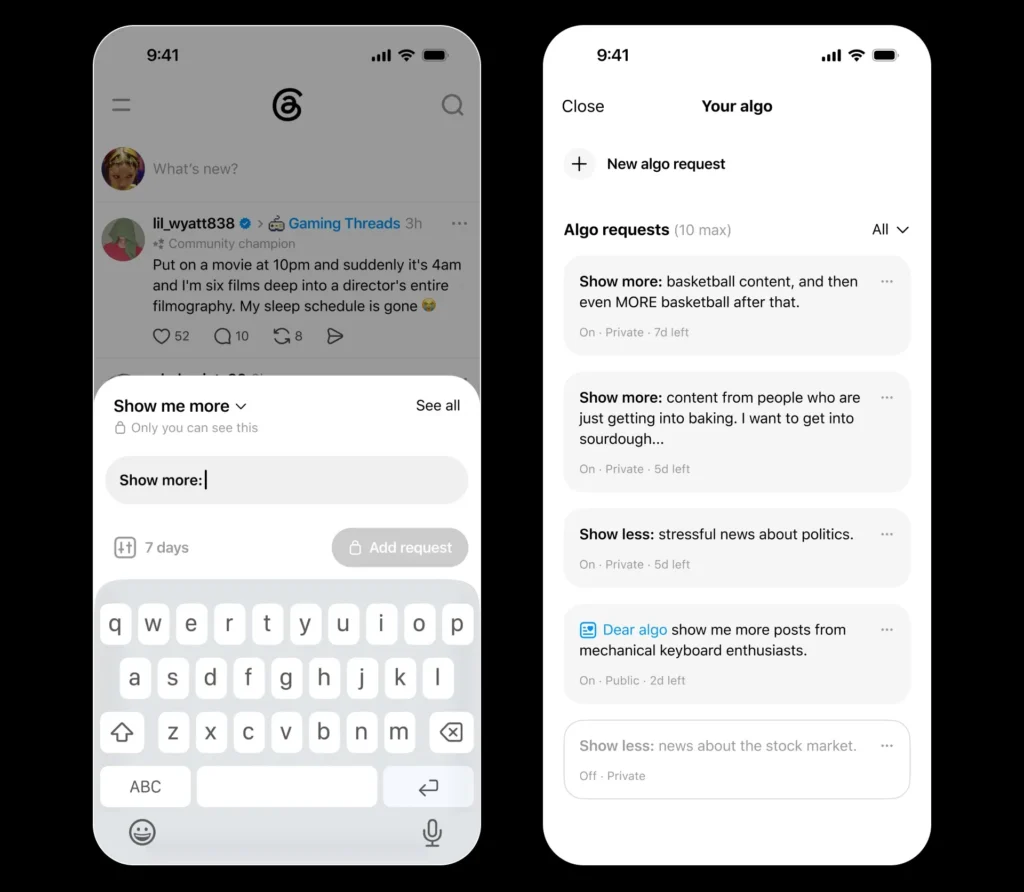
On June 16, 2026, Threads introduced a feature called “Your Algo,” expanding on its earlier “Dear Algo” tool that debuted in February. The original feature allowed users to influence recommendations by publishing public posts such as, “Dear Algo, show me more posts about podcasts,” effectively signaling the content they wanted to see more—or less—often.
The newly launched “Your Algo” option removes the need for public requests. Instead, users can privately communicate their preferences directly to the platform.
People can specify topics they would like to see more or less frequently and determine how long those preferences should remain active—one day, three days, or an entire week. For example, a user might request more baseball-related content while reducing the amount of stressful news appearing in the feed.
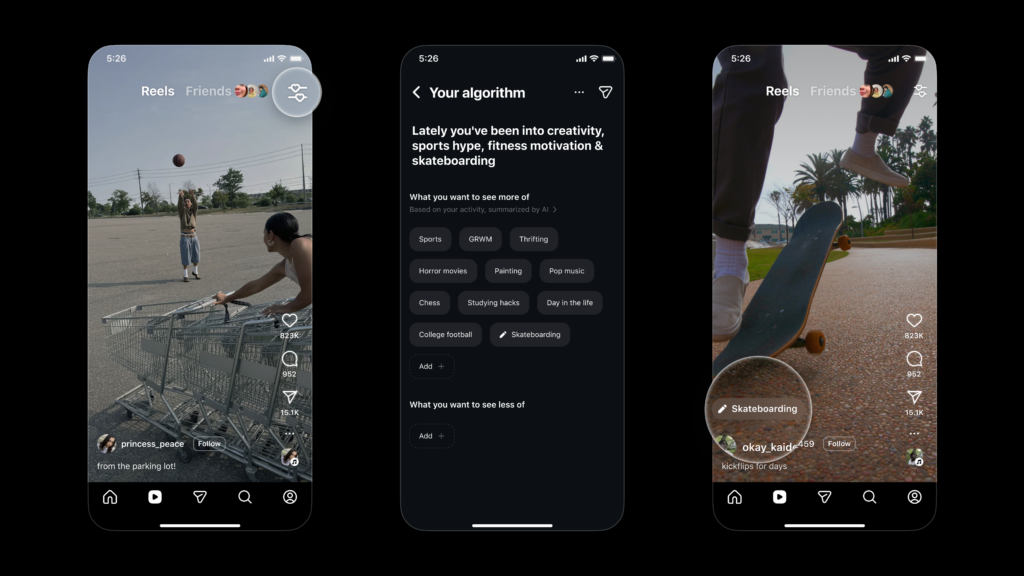
Earlier in June, Instagram unveiled a feature designed to provide greater transparency and control over its recommendation system. Known as “Your Algorithm,” the tool enables users to see which interests and topics influence the content they receive and adjust those signals accordingly.
Although the feature first appeared in the Reels experience in December 2025, it has now expanded across the main feed, Explore, and Reels sections.
Once users access the tool through the settings menu, they are presented with the topics Instagram believes matter most to them. From there, they can refine those assumptions, indicating which subjects they want to see more frequently and which ones should take a back seat. The platform then adjusts recommendations to reflect those choices.
Instagram chief Adam Mosseri has noted that recommendation systems have traditionally operated as black boxes, offering little insight into why specific content appears. According to him, advances in large language models (LLMs) are making it possible to build systems that are far more transparent, helping users understand recommendations while giving them a direct way to communicate their interests.
TikTok
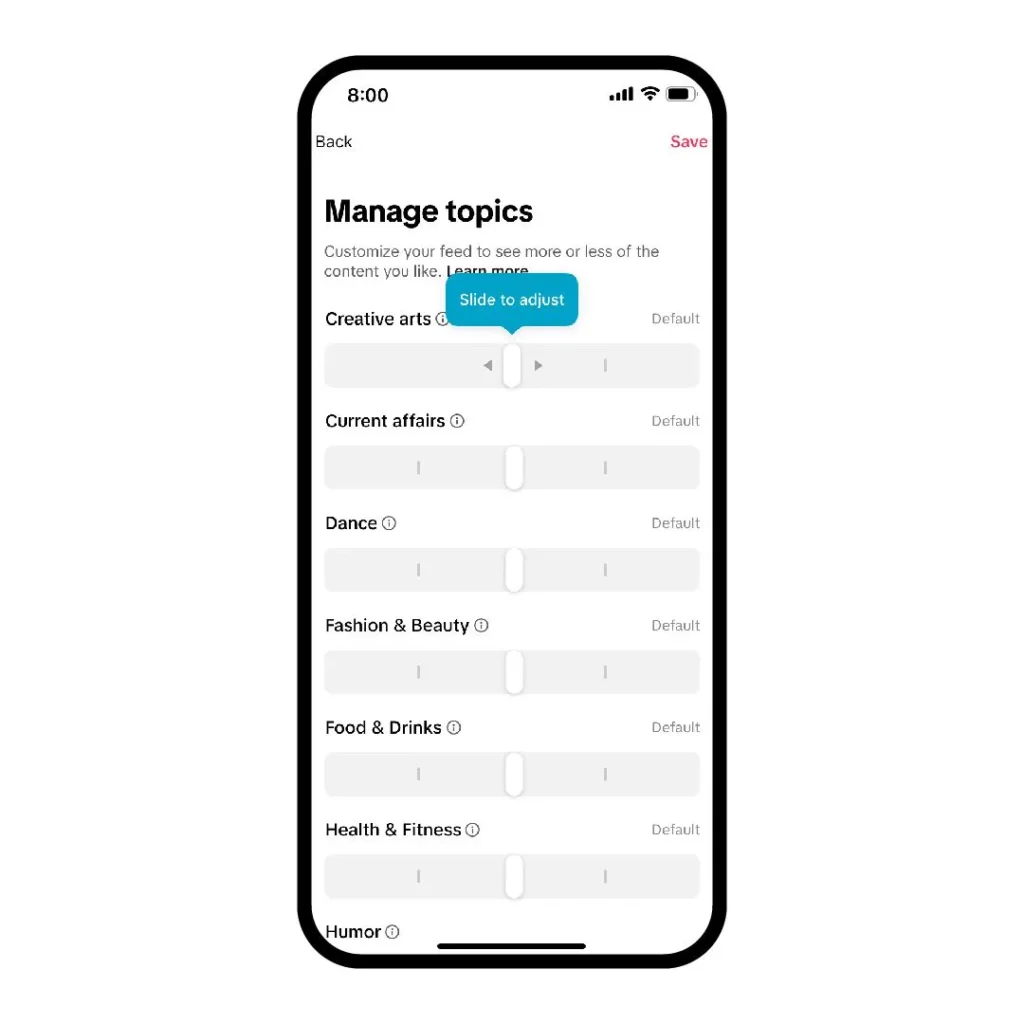
TikTok offers a feature called “Manage Topics,” which gives users additional influence over the content appearing in their “For You” feed. Introduced in 2024, the tool can be found within the app’s settings and allows people to adjust their interest levels across categories such as sports, travel, humor, current affairs, dance, and food.
Using a simple slider, users can increase or decrease the visibility of content associated with each topic, tailoring the feed to better match their preferences.
For those unsure about what belongs to a specific category, TikTok provides explanatory information alongside each topic. For example, the platform describes its “Creative Arts” category as covering areas such as painting, drawing, graphic design, and educational art content.
TikTok expanded the feature further in 2025 with the introduction of AI-powered Smart Keyword Filters. These filters automatically recognize and block related terms rather than targeting only exact keywords. As an example, filtering out “remodeling” will also reduce content containing closely related terms such as “renovation” and “renovations,” creating a more effective and comprehensive filtering experience.