
Mastodon, the decentralized social platform often positioned as an alternative to major networks such as X and Threads, is embracing an unexpectedly familiar tool in its effort to solve one of the open web’s most persistent challenges: helping creators grow and maintain an audience.
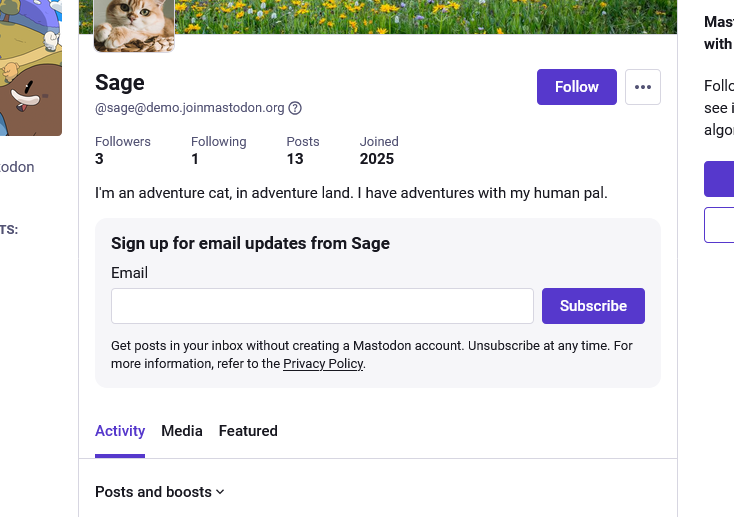
As part of its latest software update, the platform is rolling out email newsletters, enabling users to deliver their posts directly to subscribers’ inboxes. Importantly, recipients won’t need a Mastodon account to receive those updates, lowering one of the key barriers to engagement.
The addition could help Mastodon expand its identity beyond that of a simple X replacement. More significantly, it offers creators a way to cultivate portable audiences within the decentralized ecosystem, reducing their reliance on centralized social platforms. By building the feature around email—a communication channel that has remained resilient through decades of technological shifts—Mastodon hopes to attract people who want to follow creators without becoming tied to another social network.
The newsletter functionality arrives with Mastodon 4.6, a broader release that also introduces redesigned user profiles and support for “Collections,” the platform’s version of community-curated follow recommendations, similar to the “Starter Packs” concept that has gained traction across social media.
For subscribers, the process is intentionally simple. Rather than creating an account, users can enter an email address and begin receiving updates from a creator immediately. While Mastodon’s standard post limit remains 500 characters, server administrators retain the ability to adjust that threshold. As a result, some servers could be optimized specifically for publishing and distributing longer-form content.
Mastodon believes the feature could make the platform more attractive to media organizations, independent journalists, and bloggers looking to reach readers beyond traditional social channels. It may also appeal to privacy-conscious users, as people can subscribe anonymously without exposing the level of personal information often collected by conventional newsletter services.
Another advantage lies in the platform’s decentralized architecture. Because Mastodon accounts are portable, creators can relocate to a different server without losing access to the audience they have built, preserving a degree of independence rarely found on centralized platforms.
In a company blog post, Mastodon explained that the initial focus of the newsletter feature is largely on institutional users. The move aligns with the platform’s recent efforts to provide hosting and moderation services for organizations seeking to operate their own servers within the network.
If widely adopted, email integration could help Mastodon expand beyond its current base of roughly 735,000 monthly active users. That figure represents a decline from the more than 2 million users the platform attracted at its peak several years ago. Across the broader decentralized ecosystem known as the fediverse, active accounts now exceed one million.
The rollout does come with certain limitations. Creators interested in offering newsletters must hold a server role that includes the necessary permissions. In practical terms, that means running their own server, using one managed by Mastodon, or coordinating with their current server administrator to gain access.
According to the company, newsletters were deliberately not enabled by default. The reason is largely economic: delivering email at scale can substantially increase the operational expenses associated with running a Mastodon server, making universal deployment impractical for many operators.