
Stickers, GIFs, and emoji reactions may soon feel outdated. Pixi is positioning interactive augmented reality (AR) as the next frontier of digital communication.
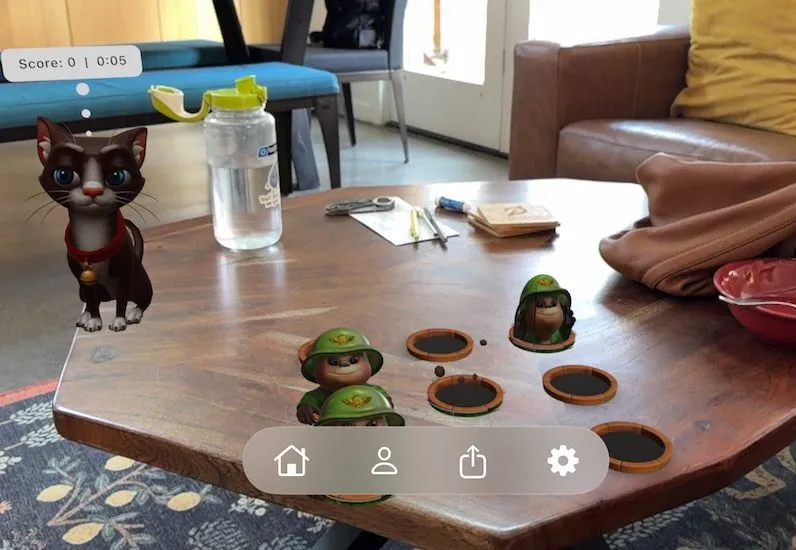
The startup officially released its messaging-focused app on the App Store on Wednesday, giving users the ability to send AI-driven AR characters directly through iMessage. Rather than arriving as passive images or animations, these virtual companions appear through the recipient’s iPhone camera, where they can engage with the environment, interact with people nearby, and respond dynamically in real time.
Although AR technology has been around for years—with companies such as Snap popularizing filters and lenses—Pixi argues that its concept pushes the medium in a new direction. By merging AR capabilities with on-device artificial intelligence, the company has created characters that can interpret and react to their surroundings. A digital cat, for instance, may change its behavior when a real dog enters the scene. According to Pixi, all visual and audio analysis takes place locally on the device, ensuring user privacy remains protected.
Pixi founder Mark Drummond, whose background includes roles at DreamWorks Animation and Apple, says the platform was built to inject more presence, personality, and spontaneity into everyday conversations. Instead of sending a simple birthday greeting, users can share interactive characters that create memorable moments, turning routine messages into playful digital experiences that feel more like gifts than text.
“The consumer problem we’re solving is thinking of a friend when they’re not present,” Drummond told TechCrunch. “Sometimes the psychology is called pebbling or creative gifting. You’re sharing tokens of affection, basically cards, e-cards, and gifts. That’s your dad, or, in some cases, your granddad’s media. We can do better. We can do something that’s digitally native, and that uses everything we learned about AR on the iPhone.”
During a demonstration earlier this week, Drummond showcased the app by selecting a cat character that launched into a string of stand-up comedy routines atop his desk. One particularly striking detail was the character’s apparent awareness of his facial expressions. The performance wrapped up the moment he smiled, highlighting the system’s ability to recognize and react to emotional signals.
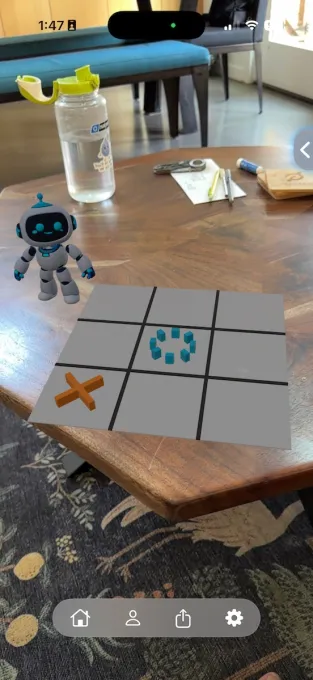
At launch, users can choose from a small lineup that includes a robot, a cat, and an animated envelope character capable of responding to voice input and playfully “attacking” friends. If someone tries to move away, the envelope will pursue them through the AR environment. The app also includes interactive experiences such as tic-tac-toe and whack-a-mole.
Pixi’s ambitions extend far beyond its initial collection of characters. The company aims to build a marketplace where studios, brands, and independent creators can publish their own interactive personalities for users to discover. In the long term, Pixi envisions these characters playing a role in promotional campaigns, movie launches, and product debuts, helping brands generate buzz and audience engagement in entirely new ways.
Drummond also revealed plans to introduce Alice in Wonderland as a character, noting that the property is open for use. He explained that the company’s version of Alice must respond to objects on a user’s desk in a manner consistent with the character’s identity, demonstrating how future partner creations can seamlessly integrate with the platform’s technology.
Looking ahead, Pixi intends to give users the tools to design and personalize their own characters.
“Part of our plan is to open up those generative AI capabilities to our [users], so they can prompt their way to say something, like, ‘I want a blue blob that threatens my friend and growls at them and keeps chasing them on the phone,’” Drummond explained.
Sending a character is designed to be straightforward. Users simply download the iOS app and access it through iMessage by tapping the plus button in the lower-left corner. Recipients, meanwhile, do not need to install the app to view a Pixi message.
For now, the platform supports iPhone 11 models and newer devices. However, Pixi plans to broaden its reach in the future by expanding to Android and integrating with messaging services such as WhatsApp and Instagram.
The app itself is free to use, though brands will have the option to monetize their custom characters if they choose.
“We’re going to encourage people to do it for free, because then people become your own brand ambassadors. You’re putting them in charge of using your characters to tell their own stories,” Drummond said.